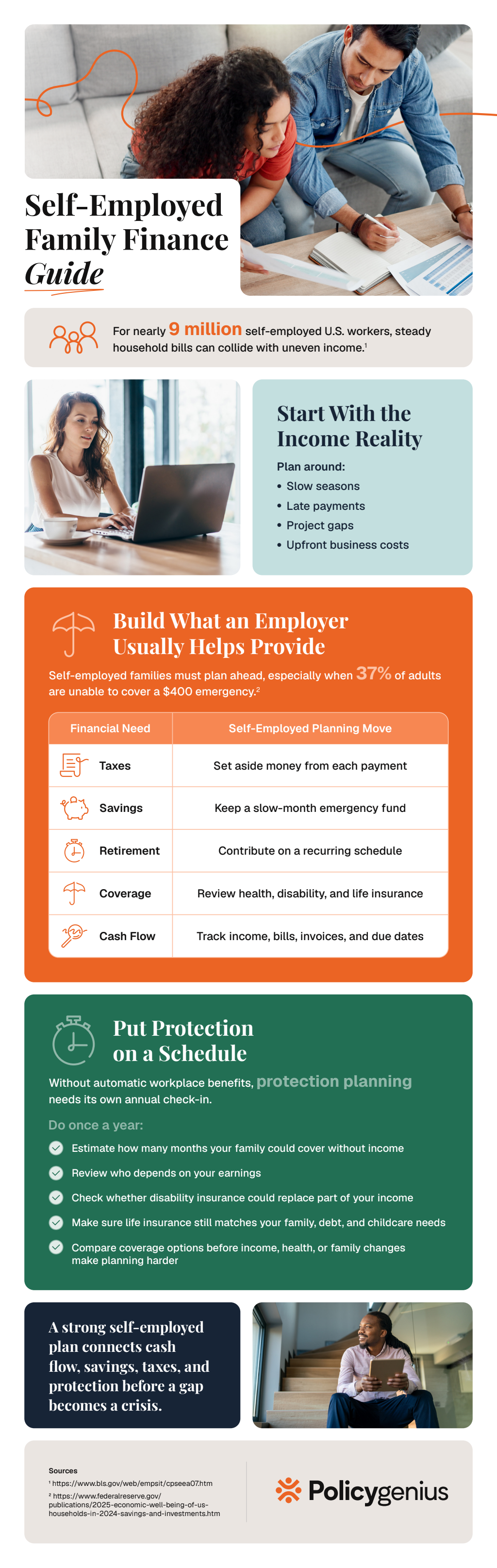
Running your own business can provide greater freedom, flexibility, and control over your career, but it also places more financial responsibility on your shoulders. Without an employer managing payroll deductions, retirement plans, or benefit enrollment, self-employed individuals must take a more active role in organizing their household finances.
The challenge is not necessarily earning income. It is creating a system that brings stability and structure to income that may fluctuate throughout the year. A thoughtful financial plan can help self-employed families navigate uncertainty while building long-term security.
Create Structure Around Variable Income
One of the biggest differences between traditional employment and self-employment is income consistency. Revenue may rise and fall based on seasonality, client demand, project schedules, or economic conditions.
Because of this, successful self-employed households often focus on creating predictable financial habits rather than relying on predictable income. Establishing a process for allocating income as it arrives can help create greater stability.
Before funds are used for everyday expenses, portions can be designated for taxes, operating expenses, savings, insurance, and household needs. This approach helps ensure important obligations are covered regardless of how strong or weak a particular month may be.
Separate Business Finances From Household Finances
A healthy business does not automatically guarantee personal financial security. Future contracts, ongoing negotiations, and a full project pipeline may feel reassuring, but they are not the same as cash that is available today.
For this reason, many self-employed professionals benefit from treating business finances and household finances as separate systems. Rather than withdrawing funds whenever personal expenses arise, it is often helpful to establish a consistent transfer or owner compensation structure.
Paying yourself a regular amount can simplify budgeting and provide a clearer picture of both business performance and household spending needs.
Prepare for Taxes and Irregular Expenses
Tax planning is especially important for self-employed workers. Without automatic withholding, tax obligations must be managed independently throughout the year.
Setting aside a portion of every payment in a dedicated tax account can make estimated tax payments more manageable and reduce the risk of unexpected liabilities.
The same strategy can be applied to recurring but infrequent expenses. Software subscriptions, licensing fees, professional memberships, equipment replacements, insurance premiums, and seasonal slowdowns are all easier to manage when money is reserved in advance rather than treated as surprises.
Building these costs into the financial system helps create smoother cash flow throughout the year.
Make Retirement Saving a Priority
Retirement planning often requires additional attention when there is no employer-sponsored retirement program available. Fortunately, self-employed individuals have access to several retirement savings options designed specifically for business owners and independent workers.
Regardless of which account type is selected, consistency is often more important than timing. Making regular contributions throughout the year can be more effective than waiting until year-end to determine whether funds remain available.
By treating retirement contributions as a routine business expense, families can make steady progress toward long-term financial goals.
Protect Against Income Disruptions
A strong financial plan should account for situations where work becomes temporarily or permanently unavailable. Even successful businesses can face unexpected challenges that affect earnings.
Emergency savings can help cover temporary interruptions, while insurance products may help address more significant risks. Disability coverage can provide income support if an illness or injury prevents someone from working, while life insurance can help protect loved ones from financial hardship if a primary earner passes away.
These protections become particularly important when household income depends heavily on one individual or business.
Review Coverage as Life Changes
Financial needs rarely remain static. Major life events often require adjustments to existing plans and coverage levels.
Changes such as marriage, the birth of a child, purchasing a home, taking on business debt, or significantly increasing income can all affect a family’s financial priorities. Regular reviews help ensure insurance coverage, savings goals, and financial strategies continue to reflect current circumstances.
Building Confidence Through Planning
Self-employment brings unique opportunities, but it also requires greater financial responsibility. Families that establish clear systems for managing income, taxes, savings, and risk are often better prepared to handle both opportunities and challenges.
The goal is not to eliminate uncertainty entirely. Instead, it is to create a financial structure that provides confidence regardless of how income fluctuates. With thoughtful planning and consistent habits, self-employed families can enjoy the flexibility of entrepreneurship while building long-term financial stability.
For a closer look at building a family finance plan around self-employed income, explore the accompanying resource.